Choosing among the world’s leading PMSM Motor suppliers is not a simple brand-counting exercise. A motor may look impressive on a specification sheet, yet perform differently under heat, vibration, frequent starts, or changing loads. Buyers should compare efficiency, torque density, control compatibility, production capacity, customization, and after-sales support. They should also check whether published figures describe tested products or broad product-family claims.
R. Krishnan, author of Permanent Magnet Synchronous and Brushless DC Motor Drives, has examined how motor characteristics and drive systems work together. A practical takeaway from his work is: “Match the motor and its drive to the application, not just the headline rating.” That distinction matters. A compact PMSM Motor for an electric vehicle faces different demands from one used in a factory pump. A supplier’s engineering support can matter as much as its catalog.
This overview of ten major suppliers is intended as a starting point, not a universal league table. Rankings can shift with region, product segment, and the evidence available. Some companies publish detailed technical data; others disclose less, which makes direct comparison harder. That is worth acknowledging. The strongest choice is the supplier whose verified capabilities fit the real operating conditions, service needs, and project scale—not simply the most familiar name. Before making a decision, confirm specifications, certifications, and support arrangements directly with the supplier.
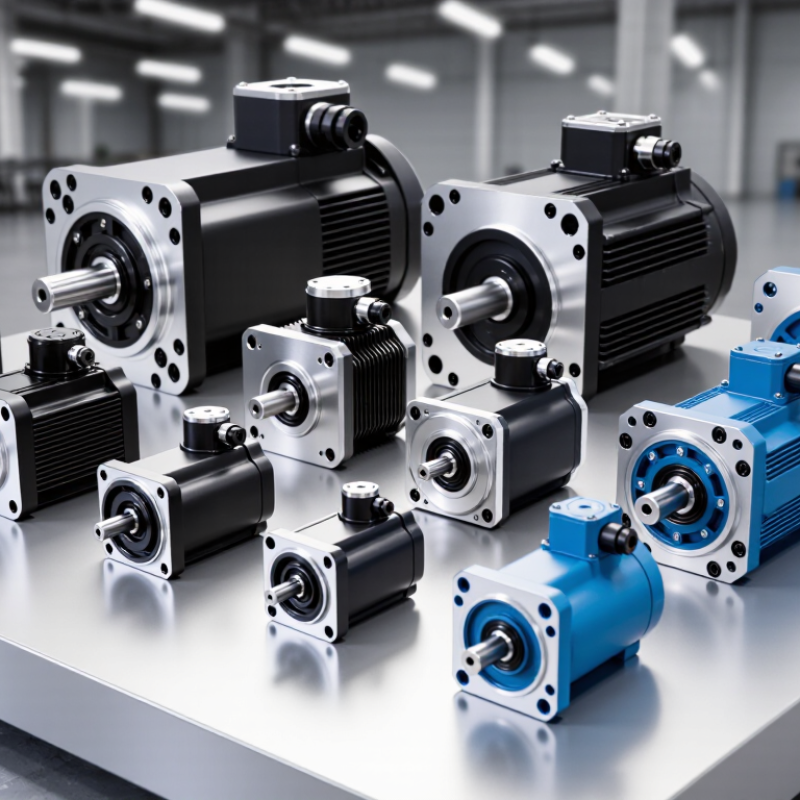
A permanent-magnet synchronous motor (PMSM) uses magnets embedded in or attached to its rotor. The stator’s alternating current creates a rotating magnetic field, which pulls the rotor into synchronized motion. At steady state, rotor speed matches the field’s speed. Pole count and supply frequency set that speed. That distinction matters. Unlike an induction motor, a PMSM does not need rotor current to create its main magnetic field. This can reduce rotor losses and support high efficiency, especially with a suitable variable-speed drive. But efficiency is not guaranteed: inverter losses, cooling needs, and operation away from the motor’s best load point still matter.
The International Energy Agency’s 2011 report, Energy-Efficiency Policy Opportunities for Electric Motor-Driven Systems, estimates that motor-driven systems use 43–46% of global electricity. This figure covers many motor types, not PMSMs alone. The U.S. Department of Energy’s 2014 motor-systems sourcebook reports that motors account for about 70% of electricity use in U.S. manufacturing. These figures show why small efficiency gains can matter across factories. For a real application, compare efficiency maps across the expected speed and torque range, not just one peak rating. Check the drive, motor, and cooling system together. A neat specification sheet can still hide a poor operating match.
Motor-driven systems are estimated to consume about 70% of industrial electricity, though the share varies by sector and measurement method. That figure makes motor selection more than a purchasing decision. It can affect a plant’s energy use, operating costs, and emissions. The scale is striking. A pump running long hours, for example, may matter more than a larger motor used briefly.
Permanent magnet synchronous motors (PMSMs) can deliver high efficiency, especially when matched with suitable drives and operating conditions. But a motor’s rated efficiency alone does not reveal the full system impact. Actual results depend on load profile, speed control, maintenance, and correct sizing. Comparing suppliers? Ask for test conditions, efficiency data across the expected load range, and support for integration. Details matter. A mismatch between motor and application can erase expected gains.
Tips: Map operating hours and typical loads before comparing options. Check the whole motor-drive system, not just the nameplate rating. Treat savings projections as estimates, then verify them with measured site data. A little uncertainty is normal; real plant conditions rarely match a perfect laboratory profile.
A useful comparison of ten leading PMSM suppliers starts with rated power, peak torque, and duty cycle—not catalog size. Compact suppliers often focus on several-kilowatt drives for pumps, fans, and light vehicles. Larger industrial portfolios may cover tens or hundreds of kilowatts for compressors, production lines, or heavy traction. Torque figures need context: a motor delivering strong starting torque may not sustain it without thermal limits or forced cooling.
Application changes the shortlist. A vehicle designer may prioritize peak torque, low rotor inertia, and rapid response. A pump manufacturer may value continuous efficiency, quiet operation, and reliable performance at a fixed speed. For each supplier, compare the same operating points, voltage, cooling method, and test conditions. A headline power rating alone can mislead. That comparison is imperfect when public data omits temperature or overload duration.
Tips: Request torque-speed curves, efficiency maps, and thermal limits for the exact model. Check whether the quoted torque is continuous or peak. Ask for references from similar duty cycles, and verify dimensions before designing around a catalog image. Small details matter.
Comparing the top 10 PMSM motor suppliers worldwide means looking beyond headline efficiency figures. Electric vehicles demand high torque density, compact packaging, and thermal control during repeated acceleration. A useful supplier can explain how winding design and cooling choices affect performance under real driving cycles. Test data matters.
Industrial automation asks different questions. Motors may need precise speed control, quick response, and stable operation across long shifts. Check how clearly a supplier documents encoder compatibility, vibration limits, and maintenance needs. A motor that fits a catalog may still require careful tuning on the production line.
HVAC applications often prioritize quiet operation and efficient performance at partial load. Fan and pump motors run for long periods, so small efficiency gains can reduce energy use over time. Still, published ratings do not tell the whole story; installation conditions can change results, and comparisons are not always perfectly aligned.
Tips: Match supplier strengths to the actual duty cycle. Ask for test conditions, thermal limits, and service guidance. If answers stay vague, pause. A shortlist should reflect application evidence, not just reputation.
An anonymized, qualitative landscape of major supplier profiles and regional capabilities. This is not a market-share ranking; strengths reflect the typical product focus of established suppliers in each profile.
| Profile | Regional base | EV traction motors | Industrial automation | HVAC motors | Typical strengths | Supplier considerations |
|---|---|---|---|---|---|---|
| Supplier Profile 01 | Japan | High | High | Medium | Automotive-grade traction systems alongside precision servo and motion-control products. | Strong fit for buyers seeking automotive quality processes and established industrial-motor engineering. |
| Supplier Profile 02 | China | High | Medium | Selective | High-volume electrified-vehicle motor and drive production, supported by a large domestic EV supply chain. | Check vehicle-platform validation, export support, and consistency of specifications across production sites. |
| Supplier Profile 03 | Germany | High | High | Medium | Automotive electrification and industrial drive technologies, including servo and variable-speed applications. | Often suited to demanding integration, documentation, and performance requirements; evaluate project cost and lead time. |
| Supplier Profile 04 | South Korea | High | Selective | Selective | Automotive electrified powertrain components and traction-motor programs for vehicle platforms. | Confirm motor availability as a standalone product or only as part of a broader drive or vehicle program. |
| Supplier Profile 05 | Switzerland | Selective | High | Selective | Precision servo motors, compact motion systems, and high-dynamic applications. | Particularly relevant when accuracy, repeatability, and compact machine integration matter more than bulk output. |
| Supplier Profile 06 | Italy | Medium | High | Medium | Industrial motors and automation-oriented drive solutions for machinery and production equipment. | Compare the available motor, drive, and control combinations against the required machine architecture. |
| Supplier Profile 07 | France | Medium | High | High | Industrial electrification and efficient motor-drive solutions used in infrastructure and building systems. | Assess local service coverage, drive compatibility, and efficiency requirements for the intended installation. |
| Supplier Profile 08 | United States | Medium | High | High | Broad industrial-motor and building-system experience, including variable-speed applications. | Verify that the specific PMSM model—not only the wider motor portfolio—meets the required duty and certification needs. |
| Supplier Profile 09 | Denmark | Selective | Medium | High | Energy-efficient motor and fan technologies for ventilation, refrigeration, and building services. | Compare airflow, acoustic performance, controls, and part-load efficiency in the complete HVAC assembly. |
| Supplier Profile 10 | China and East Asia | Medium | High | Medium | Servo motors and automation components, with manufacturing scale across multiple motor categories. | Check encoder options, control-system interoperability, regional technical support, and long-term spare-parts availability. |
A credible PMSM comparison starts with comparable rated-output data, not a headline efficiency figure. Record continuous output in kilowatts, rated speed, torque, voltage, cooling method, and duty cycle. A 75 kW motor at 1,500 rpm is not directly comparable with one rated at 3,000 rpm. Check whether figures describe continuous operation or a short peak.
IEC 60034-30-1 defines IE efficiency classes mainly for line-operated induction motors, so its labels should not be applied automatically to every PMSM. For a fair review, request test results with stated measurement methods, operating points, and tolerances; IEC 60034-2-1 provides relevant efficiency measurement methods. The IEA report Energy Efficiency Policy Opportunities for Electric Motor-Driven Systems estimates these systems use about 45% of global electricity. Small efficiency differences matter. Still, a neat data sheet can hide unequal test conditions.
Tips: Compare efficiency maps across the expected speed-and-load range, not just one rated point. Confirm the rated output matches the actual continuous duty, and ask for independent test documentation. If a supplier shares only peak efficiency, treat the comparison as incomplete. That is not proof of poor performance, but it is a reason to ask better questions.
Compare rated power, torque, speed, voltage, cooling method, and duty cycle. Use the same operating conditions for every motor. Catalog size alone tells little.
Peak torque may last only briefly. Ask for continuous torque, overload duration, and thermal limits. A strong starting figure can be misleading.
Check torque density, rotor inertia, packaging, and cooling. Repeated acceleration can create demanding thermal conditions. Test data matters.
Review speed-control precision, response, encoder compatibility, vibration limits, and maintenance needs. A catalog fit may still need careful production-line tuning.
Quiet operation and part-load efficiency can matter for fans and pumps running long hours. Installation conditions may change actual performance. Small details matter.
Compare continuous output at matching speeds and conditions. A 75 kW motor at 1,500 rpm is not directly comparable with one at 3,000 rpm.
No. The standard’s IE classes mainly address line-operated induction motors. Request documented measurement methods and operating points instead.
Ask for torque-speed curves, efficiency maps, thermal limits, and test conditions. Check dimensions before designing around a catalog image. Missing data deserves follow-up, though it does not prove poor performance.
A PMSM Motor uses permanent magnets in its rotor and operates in synchronism with the rotating magnetic field produced by its stator. This design can deliver high efficiency, precise speed control, and strong torque performance across a broad range of operating conditions. These qualities matter in a market where motor systems account for about 70% of industrial electricity use, making motor selection an important part of improving energy performance.
This overview compares ten leading supplier categories by rated power, torque, and intended application, while mapping their strengths across electric vehicles, industrial automation, and HVAC systems. Rather than treating one specification as decisive, it considers how output and operating requirements shape suitability for each use. IEC 60034-30-1 efficiency classes and rated-output data provide a consistent basis for evaluating performance, helping buyers assess options against their application needs.
