Choosing the right High Efficiency Motor is not simply a matter of selecting the highest efficiency label. The correct decision depends on load profile, operating hours, speed requirements, installation conditions, and maintenance resources. A motor running continuously under stable load may justify a premium IE3 or IE4 model. However, an oversized motor can operate inefficiently, even when its nameplate looks impressive.
Start with real operating data. Record voltage, current, running hours, starting frequency, and torque demand. A pump, conveyor, compressor, and fan each create different performance challenges. For example, a conveyor may require high starting torque, while a fan often benefits from variable-speed control. Check the motor’s rated efficiency under the intended load, not only at full load. Measure twice.
Technical documents should confirm compliance with recognized standards, such as IEC 60034-30-1, and clearly state duty class, insulation rating, enclosure protection, and temperature limits. Experience also shows that the motor and drive should be assessed together. A variable frequency drive can reduce energy use, but poor installation may cause bearing currents, electromagnetic interference, or additional heat. These details are easy to overlook.
The best choice balances purchase cost, energy consumption, reliability, service access, and expected lifetime. A smaller energy saving may still matter greatly in a factory running twenty-four hours daily. Yet calculations remain estimates when operating conditions change. That uncertainty deserves attention. Speak with qualified engineers, compare verified test data, and review the manufacturer’s warranty and service network. The goal is not the most advanced motor available. It is a dependable High Efficiency Motor that performs efficiently in the place where it will actually work.
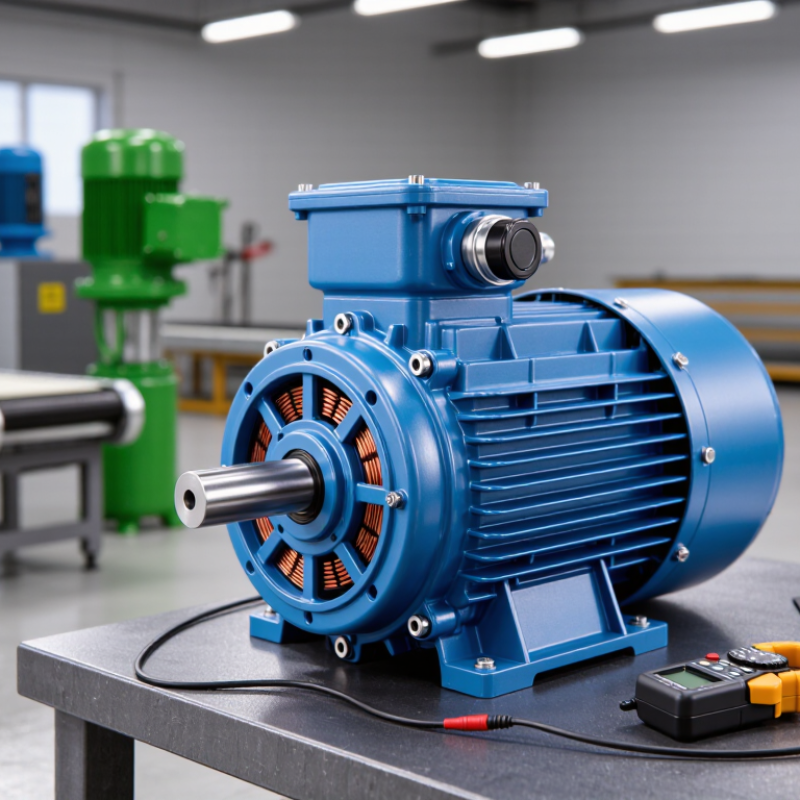
Understanding High-Efficiency Motor Ratings and Performance
How to Choose the Right High Efficiency Motor
Understanding High-Efficiency Motor Ratings and Performance
A motor’s efficiency rating is only the starting point. IEC 60034-30-1 classifies motors from IE1 to IE4, with IE5 addressing emerging ultra-efficient designs. These ratings describe losses at defined test conditions, usually near rated voltage, frequency, and load. They do not guarantee identical savings in every factory.
The IEA’s Energy Efficiency Market Report 2016 estimated that motor-driven systems consume about 53% of industrial electricity. Small efficiency differences therefore become significant across pumps, fans, compressors, and conveyors. A 110 kW motor running continuously can waste substantial energy through modest losses. Check efficiency at the actual operating point, not only at full load. Partial-load data matters.
The nameplate should be read beside the application. Confirm duty cycle, starting method, ambient temperature, altitude, enclosure, bearing requirements, and inverter compatibility. Harmonic heating can reduce practical performance. So can oversizing. It is common, but rarely harmless.
Field assessments often find motors operating far below their rated load. The higher-rated unit may look safer, yet its losses can rise relative to useful output. Measure current, voltage, power factor, and shaft demand before selecting a replacement. The U.S. Department of Energy’s motor-system guidance recommends evaluating the complete driven system, rather than judging the motor alone. That approach is less convenient. It is usually more accurate.
Matching Motor Specifications to Your Application Requirements
How to Choose the Right High Efficiency Motor
Matching motor specifications to application requirements starts with the load, not the motor catalogue. Record the required speed, torque, power, duty cycle, and starting conditions. A motor rated only for average load may overheat during frequent starts.
Torque matters most.
In field commissioning, I check the complete torque-speed curve before approving a selection. Pumps often need steady operation, while conveyors may demand high starting torque. Fans can tolerate different control methods, but their performance changes with airflow resistance. Confirm whether the motor will run continuously, intermittently, or under repeated acceleration.
Also check voltage, frequency, phase, enclosure rating, insulation class, and ambient temperature.
Small details matter.
Efficiency should be evaluated at the actual operating point, not only at the rated load. Oversizing can reduce efficiency and power factor during light-load operation. A variable-speed drive may improve control, but motor insulation and cooling must suit that arrangement. Follow applicable standards, installation instructions, and measured test data.
A spreadsheet can still mislead. I have seen selections pass paper calculations but struggle in dusty rooms with poor ventilation. That mistake is avoidable.
Leave reasonable thermal and torque margins, then verify vibration, current, and temperature after installation. Recheck the choice after seasonal load changes.
Comparing Motor Types, Energy Classes, and Operating Conditions
How to Choose the Right High Efficiency Motor
Comparing motor types, energy classes, and operating conditions requires more than reading the nameplate. The International Energy Agency reports that electric motor systems consume roughly 40% of global electricity. Small efficiency gains can therefore reduce substantial operating costs. Induction motors suit many pumps, fans, and conveyors. Permanent-magnet motors can deliver higher efficiency at variable speeds, but they may require specialized controls and maintenance. Synchronous reluctance motors offer another option, especially where precise speed control matters.
Energy classes also deserve careful attention. IEC 60034-30-1 defines efficiency levels from IE1 to IE5. A higher class usually means lower losses, but purchase price is not the full calculation. Check annual running hours, load profile, electricity tariffs, and expected service life. The U.S. Department of Energy notes that motor-driven equipment represents more than half of industrial electricity use. Yet an oversized IE5 motor can waste energy at light loads. That detail is easy to miss.
Tips: Measure real loads before selecting the motor. Record current, speed, temperature, and start frequency. Match the motor with an efficient variable-speed drive when demand changes. Keep ventilation clear; dust can raise winding temperatures and shorten insulation life. Field conditions are rarely perfect. A technically excellent motor may underperform in a humid, poorly aligned, or frequently cycled installation. Recheck assumptions after commissioning, because the first selection is sometimes wrong.
How to Choose the Right High Efficiency Motor
Representative efficiency comparison for 15 kW, four-pole, three-phase motors operating at 400 V and 50 Hz. Actual performance varies by motor design, speed control, temperature, and load profile.
IE3 and IE4 motors generally reduce electrical losses compared with IE2 motors, especially near rated load. For variable-load applications, evaluate efficiency across the complete duty cycle and consider a variable-speed drive, correct motor sizing, ambient conditions, starting requirements, and maintenance access before selecting the motor.
Evaluating Installation, Maintenance, and Total Ownership Costs
Choosing a high-efficiency motor starts with installation conditions, not the efficiency label. Check voltage, load profile, ambient temperature, alignment, and available space. A motor that runs lightly loaded may waste savings through poor sizing. The U.S. Department of Energy reports that motor-driven equipment can consume about 70% of manufacturing electricity. Small design errors therefore become expensive over thousands of operating hours.
Installation cost includes more than the purchase price. Budget for foundations, couplings, cable upgrades, controls, commissioning, and production downtime. A proper alignment check can reduce vibration, bearing stress, and unexpected repairs. Maintenance records also matter. Track temperature, insulation resistance, vibration, lubrication, and operating current. The first estimate is rarely perfect. Real measurements should replace assumptions after commissioning.
Total ownership cost combines purchase, energy, maintenance, downtime, and disposal expenses. The European Commission’s motor ecodesign studies identify electricity use as the dominant lifetime cost for many industrial motors. Compare annual energy with this calculation: rated kilowatts, load factor, operating hours, and local electricity price. A two-percent efficiency gain may look modest, yet it can matter greatly in continuous-duty service. However, efficiency alone cannot justify every replacement. A shorter payback may hide installation risks, while a longer payback can still be sensible when reliability improves. Use documented plant data, independent efficiency testing, and a sensitivity check for energy prices.
How to Choose the Right High Efficiency Motor - Evaluating Installation, Maintenance, and Total Ownership Costs
Representative planning estimates for a 15 kW, four-pole, 400 V motor operating at a 75% average load for 8,000 hours per year. Energy cost is estimated at USD 0.12 per kWh. Actual results vary with load profile, tariffs, environment, and service practices.
| Evaluation Dimension |
Standard-Efficiency Option
(IE2) |
High-Efficiency Option
(IE3) |
Premium-Efficiency Option
(IE4) |
Selection Consideration |
| Rated output |
15 kW |
15 kW |
15 kW |
Match the motor rating to the actual duty instead of selecting excessive capacity. |
| Typical full-load efficiency |
Approximately 91.5% |
Approximately 93.6% |
Approximately 95.0% |
Efficiency should be checked at the expected operating load, not only at full load. |
| Expected installation complexity |
Low |
Low to moderate |
Moderate |
Confirm frame size, shaft dimensions, mounting arrangement, alignment, and available electrical capacity before purchase. |
| Estimated installation cost |
USD 500 |
USD 550 |
USD 650 |
Includes typical mechanical fitting, alignment, electrical connection, and commissioning labor; excludes major rewiring or process modifications. |
| Estimated motor purchase cost |
USD 1,100 |
USD 1,400 |
USD 1,900 |
Use the delivered price, availability, warranty, and replacement lead time when comparing alternatives. |
| Estimated annual electricity consumption |
98,361 kWh |
96,154 kWh |
94,737 kWh |
Higher efficiency produces the greatest benefit in applications with long operating hours and steady loading. |
| Estimated annual energy cost |
USD 11,803 |
USD 11,538 |
USD 11,368 |
Recalculate using the site’s actual electricity tariff, demand charges, and operating schedule. |
| Estimated annual maintenance cost |
USD 300 |
USD 285 |
USD 270 |
Plan for inspection, cleaning, lubrication where applicable, vibration checks, and electrical testing. |
| Estimated 10-year energy cost |
USD 118,032 |
USD 115,385 |
USD 113,684 |
Energy normally represents the largest portion of a motor’s lifetime ownership cost. |
| Estimated 10-year maintenance cost |
USD 3,000 |
USD 2,850 |
USD 2,700 |
Actual maintenance depends more on environment, alignment, loading, and preventive practices than efficiency class alone. |
| Estimated 10-year total ownership cost |
USD 122,632 |
USD 120,185 |
USD 118,934 |
Total ownership cost includes purchase, installation, energy, and scheduled maintenance over ten years. |
| Estimated simple payback versus IE2 |
Baseline |
Approximately 1.3 years |
Approximately 1.8 years |
Payback improves as annual operating hours, motor loading, or electricity prices increase. |
| Best-fit application profile |
Low operating hours or tight initial budget |
General industrial duty and frequent operation |
High operating hours and energy-focused facilities |
Select the option with the lowest risk-adjusted lifetime cost, not simply the lowest purchase price. |
Selecting the Motor with the Best Long-Term Efficiency and Reliability
Choosing the right high efficiency motor starts with long-term performance, not the purchase price. The International Energy Agency reports that electric motor systems consume about 43–46% of global electricity and nearly 70% of industrial electricity. Small efficiency differences can therefore become substantial operating costs. Compare motors using the actual load profile, annual running hours, electricity tariff, and expected service life. A motor running 6,000 hours yearly deserves deeper analysis.
Reliability depends on operating conditions. Check ambient temperature, dust, humidity, vibration, starting frequency, and variable-speed-drive compatibility. Review insulation ratings, bearing protection, cooling design, and maintenance access. The U.S. Department of Energy notes that motor-driven systems can represent roughly 70% of industrial electricity use.
Yet efficiency data alone can mislead. A motor may perform well at full load but waste energy under frequent partial-load operation. Test the real duty cycle.
A practical selection should include lifecycle cost and condition monitoring. Track vibration, temperature, current imbalance, and insulation resistance during operation.
Keep baseline readings. They expose gradual problems before failure. IEC 60034-30-1 efficiency classes help standardize comparisons, but laboratory ratings cannot predict every site condition.
The cheapest calculation can be wrong. Review assumptions after six months, then adjust maintenance intervals or control settings. Long-term reliability is built through evidence, not confident promises.
Conclusion
Choosing the right High Efficiency Motor begins with understanding efficiency ratings, performance data, and the relationship between motor output and actual operating needs. Key specifications such as horsepower, torque, voltage, speed, duty cycle, starting requirements, and load profile should be matched carefully to the application. It is also important to compare motor types and energy efficiency classes while considering environmental conditions, operating hours, temperature, humidity, and available power quality.
A reliable selection process should evaluate more than the purchase price. Installation requirements, compatibility with control systems, accessibility for maintenance, expected service life, and replacement part availability all affect total ownership costs. A motor that operates efficiently under real working conditions can reduce energy consumption, downtime, and long-term expenses. By balancing technical performance, installation practicality, maintenance needs, and lifecycle value, users can select a High Efficiency Motor that delivers dependable operation, strong energy savings, and lasting reliability.
