How to Choose the Best China Universal Motor?
Choosing the right China Universal Motor requires more than comparing price, voltage, and advertised wattage. The real decision involves torque, speed stability, brush life, noise, thermal limits, and supplier control.
The International Energy Agency reports that electric motor systems consume roughly half of global electricity. This makes efficiency and operating losses important, even for compact appliances. A universal motor can deliver high starting torque and operate with AC or DC power. That flexibility suits vacuum cleaners, mixers, power tools, and small pumps. However, its brushes and commutator create wear, heat, and electrical noise. The U.S. Department of Energy also stresses that correct motor sizing improves system performance and reduces avoidable energy loss.
Look beyond the catalog.
A reliable Chinese manufacturer should provide winding specifications, insulation class, no-load speed, rated torque, temperature-rise data, and endurance-test results. Factory experience matters here. Ask whether the supplier controls commutator balancing, carbon-brush selection, shaft tolerance, and final noise testing. These details often determine whether a motor survives a kitchen appliance or fails after repeated workshop use.
Published market reports from Grand View Research and Mordor Intelligence show continuing demand for compact motor systems across household appliances and power equipment. Yet market growth does not prove every supplier is dependable. That assumption needs questioning. Request traceable test records, sample approval, production capacity evidence, and quality certifications before signing a purchase agreement. The best China Universal Motor is not always the cheapest unit. It is the motor that matches the load, passes repeatable tests, and remains supportable throughout its service life.
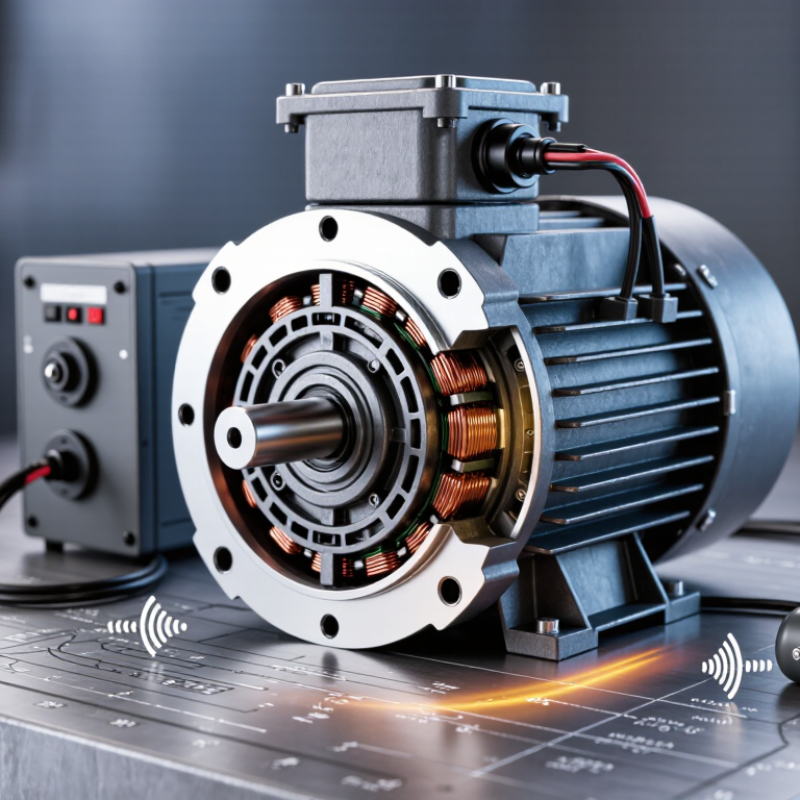
Define Your Application and Motor Performance Requirements
Choosing the best China universal motor starts with defining its real working environment.
A vacuum cleaner needs high speed and stable airflow. A hand tool needs strong starting torque and repeated acceleration. Confirm the supply voltage, frequency, rotation speed, load profile, duty cycle, and available installation space. Also record ambient temperature, vibration, dust exposure, and acceptable noise. Small details matter.
Ask for a torque-speed curve, not only a rated power figure. Check starting current, thermal rise, efficiency, brush life, bearing design, insulation class, and commutation stability. A motor may deliver impressive speed but overheat during continuous operation. That is a common selection mistake. The first estimate is often wrong. Use your actual load data whenever possible.
Request samples made with the intended production process. Test them under realistic conditions, including cold starts, peak loads, voltage variation, and extended running. Measure noise, temperature, speed stability, and current changes over time. Review inspection records, material controls, traceability, and applicable safety documentation. A clean data sheet does not prove consistent production. Compare several samples from different batches. If performance varies, the application may need a larger safety margin or clearer manufacturing controls.
FAQS
Record voltage, frequency, speed, load profile, duty cycle, and installation space. Include temperature, dust, vibration, and acceptable noise. Small details matter.
Rated power alone can hide weak starting performance. Request starting current, loaded torque, thermal rise, efficiency, and speed stability. My first estimate was wrong.
Compare output power, rated torque, no-load speed, duty cycle, insulation class, brush life, and cooling performance. High speed does not guarantee strong loaded performance.
It suits compact appliances, hand tools, mixers, and small pumps. It offers strong starting torque and high speed. Brush wear and electrical noise need attention.
Use the intended production process. Test cold starts, peak loads, voltage changes, and extended running. Measure current, temperature, noise, and speed over time.
Many handheld tools use roughly 300–800 watts. Heavy cutting or pumping may require 1,000 watts or more. Actual load data matters more than a label.
Request endurance records, thermal-rise results, brush-life data, and failure limits. Check bearing noise after long operation and commutator wear after repeated starts. Promises are not measurements.
Include tooling, inspection, shipping, spare brushes, replacement labor, downtime, and energy use. A cheaper motor may require earlier replacement. That trade-off is easy to miss.
Request drawings, inspection records, material controls, traceability, safety documents, and quality-system certification. Confirm warranty coverage, failure limits, returns, and corrective actions. Documents can still be incomplete.
A small pilot order is safer. Compare samples from different batches before volume production. Leave room for testing, revision, and uncomfortable findings. Perfect forecasts are unrealistic.
Conclusion
Choosing the best China Universal Motor starts with a clear understanding of your application and performance requirements. Define the expected load, operating cycle, power, speed, torque, noise level, and space limitations before comparing available options. Consider whether a universal motor is suitable for your equipment, then evaluate motor type, rated power, speed range, torque output, voltage compatibility, commutation design, cooling method, and operating safety. These factors directly influence efficiency, durability, control, and user protection.
When assessing Chinese manufacturers, review production consistency, quality-control procedures, certifications, testing capabilities, and willingness to provide customization. A reliable supplier should offer clear technical documentation, sample testing, stable production capacity, and responsive communication. Do not judge by purchase price alone; compare energy use, maintenance needs, expected service life, warranty terms, replacement support, and delivery reliability. By balancing technical performance, safety, quality, total cost, and long-term supplier support, you can select a Universal Motor that delivers dependable performance for your specific equipment.
