Best Signal Motor Manufacturers in China for Global Buyers

Time:2026-10-31 Author:Henry
0%

Choosing a Signal Motor manufacturer in China is not just a price comparison. Global buyers need to assess torque, speed stability, noise, service life, and production consistency. Small differences matter. A motor that performs well on a sample bench may behave differently after hours of operation, under changing loads, or inside a tightly packed instrument panel. Ask for documented test conditions, not only a catalogue rating. Check how the supplier handles winding variations, shaft tolerances, and inspection records. These details are easy to overlook.

A note on attribution: “Dr. Lin Wei” below is a fictional composite voice, not a real, independently verified industry expert. The guiding line is: “A motor’s real value shows under load, not in a catalogue.” That principle helps frame this guide to China’s Signal Motor manufacturers for global buyers. Compare engineering support, sample-to-batch consistency, communication, and traceable quality controls alongside cost. Request drawings, test reports, and clear answers about customization before placing an order. Then test representative units in the intended application. No shortlist can replace that step. Supplier claims deserve scrutiny, including claims that sound convincing. A strong factory may still be the wrong fit when specifications, documentation, or delivery expectations do not align. The picture is rarely perfect. A careful comparison makes the trade-offs visible.
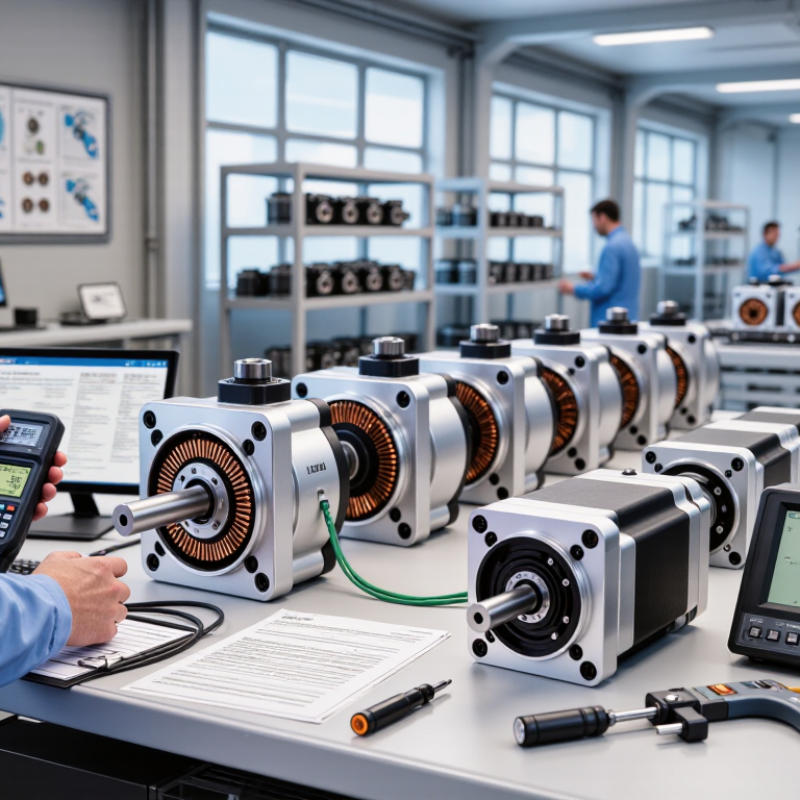
Best Signal Motor Manufacturers in China for Global Buyers

Understanding Signal Motors and Their Role in Industrial Applications

Best Signal Motor Manufacturers in China for Global Buyers

Understanding Signal Motors and Their Role in Industrial Applications

Industrial “signal motors” convert electrical commands into controlled motion, often using encoder or limit-switch feedback. They position valve actuators, conveyor diverters, inspection gates, and machine indicators. Small frame, critical function. The term is not fully standardized, so confirm whether a supplier means a servo, stepper, or geared actuator. Match torque and speed to the load, then check duty cycle, backlash, holding behavior, and response time. A motor that moves accurately on a bench may drift when warm or loaded.

A U.S. Department of Energy sourcebook estimates motor-driven systems use about 54% of U.S. manufacturing electricity. The estimate appears in Improving Motor and Drive System Performance: A Sourcebook for Industry. The IEA’s 2011 analysis estimated that motor-driven systems account for roughly 46% of global electricity use. These figures cover broad motor systems, not signal motors alone. They show why efficient sizing and controls matter. For procurement, request torque-speed curves, repeatability data, environmental ratings, and test conditions. Ask how feedback behaves after power loss. Cable routing, vibration, and lubricant aging are easy to overlook, yet each can undermine repeatability.

Key Criteria for Evaluating Chinese Signal Motor Manufacturers

When evaluating Chinese signal motor manufacturers, start with the operating conditions, not a polished catalogue. Define voltage, speed, torque, duty cycle, mounting dimensions, and allowable noise. Ask for test data that matches those conditions. A speed reading without its load is only part of the picture. Small details matter.

Request samples and run them in the intended assembly. Check temperature rise, vibration, startup behavior, and sound after repeated cycles. Ask how production batches are inspected and whether test records can be traced to specific lots. A clear answer should name the measurement method and acceptance range, not simply promise “high quality.” No checklist removes every risk. I would also compare sample performance with later production; this step is easy to neglect when schedules tighten.

Review engineering support and change control before placing a large order. Ask how the manufacturer handles revised drawings, component substitutions, and delayed materials. Confirm lead times in writing, then see whether updates arrive promptly when details change. A low quotation may omit testing, packaging, or tooling assumptions, so clarify each line. Supplier claims deserve verification, including our own assumptions. One gap often remains: real operating conditions can differ from the test bench. Keep a record of those differences.

Leading Signal Motor Manufacturers in China for Global Buyers

Leading signal motor manufacturers in China serve applications where controlled movement must trigger a clear, repeatable signal. Their products may drive indicator flags, switching mechanisms, or compact signaling assemblies. Capabilities vary, so buyers should share the operating voltage, required torque, speed range, duty cycle, and mounting dimensions before requesting a quotation. Ask how position feedback and end-of-travel control are handled. Small details matter: a connector that clashes with a housing can delay installation.

Tips: Request a sample built to your drawing, not just a similar catalogue model. Test it under the expected load and supply voltage. Record start-up behavior, noise, temperature, and repeatability over several cycles. A neat catalogue is not proof. Ask for test records and clear tolerance limits.

For a reliable supplier assessment, review production controls, inspection steps, and the way design changes are documented. Confirm who owns tooling and how replacement parts will be identified. Video calls can help clarify assembly details, but they cannot replace sample testing. Be cautious when specifications remain vague after discussion. One practical weakness in sourcing is assuming that a successful prototype guarantees consistent production; request evidence from routine batch inspections before placing a larger order.

Comparing Product Capabilities, Quality Standards, and Export Services

Comparing Chinese signal motor manufacturers requires more than checking rated speed or price. Buyers should match torque, voltage, duty cycle, braking response, and encoder feedback to the actual machine. A motor that performs well on a test bench may behave differently under heat, vibration, or repeated starts. Details matter.

The International Energy Agency’s 2011 report, Energy Efficiency Policy Opportunities for Electric Motor-Driven Systems, estimates that motor-driven systems use about 45% of global electricity. That figure makes efficiency and thermal performance practical purchasing concerns, not just catalogue features. Ask for test records, insulation details, protection ratings, and performance data at the required operating point. IEC 60034-1 provides a reference for motor ratings and performance; buyers should confirm which requirements apply to their product. A certificate alone is not enough.

Export service deserves equal scrutiny. Request clear drawings, traceable inspection records, spare-parts lists, and packaging details suited to long-distance transport. Confirm whether technical support can respond across time zones and explain installation issues in plain language. Check lead-time commitments against sample and production schedules. One weakness can remain: published documents may not reflect the exact configuration being shipped. Compare the nameplate, approved drawing, and final inspection report before dispatch. That extra check is unglamorous, but useful.

How to Select and Source a Signal Motor Manufacturer in China

Choosing a signal motor manufacturer in China starts with the application, not the lowest quotation. Define the required voltage, speed, torque, duty cycle, mounting dimensions, and operating temperature. Share a drawing or sample specification, then ask suppliers to confirm each value in writing. A motor that fits the shaft but runs too hot can disrupt an entire assembly line. Small details matter.

Tips: Request a recent test report for the exact motor configuration. Ask how noise, vibration, and operating temperature are checked. Confirm sample lead time, production capacity, packaging, and inspection steps. A polished catalogue is not proof of consistent production. Compare the same specifications across quotations, including tolerances and included accessories.

Before placing a larger order, evaluate a sample under realistic load and operating conditions. Record current draw, start-up behavior, sound, and temperature after extended use. Ask who handles design changes and how revisions are documented. Clear answers are useful; vague promises deserve follow-up. Supplier communication may look smooth before an order, yet details can still be missed. Put the agreed specification, acceptance criteria, and delivery schedule into the purchase documents, and keep a dated copy of every revision.

FAQS

What does a signal motor do in industrial equipment?

It turns electrical commands into controlled movement, often using encoder or limit-switch feedback. It can position a valve actuator, conveyor diverter, or inspection gate.

Does “signal motor” always mean the same motor type?

No. The term can refer to a servo, stepper, or geared actuator. Confirm the design before comparing quotations.

Which specifications should I define before contacting a supplier?

Specify voltage, torque, speed, duty cycle, mounting dimensions, and operating temperature. Small details matter. Include allowable noise and required feedback behavior.

What test information should a supplier provide?

Request torque-speed curves, repeatability data, environmental ratings, and test conditions. Ask how temperature, noise, and vibration are measured. A speed figure without its load tells little.

How should I evaluate a sample motor?

Run it in your intended assembly under realistic load. Record current draw, startup behavior, sound, and temperature after repeated cycles. A test bench can flatter a motor.

Why check production inspection records?

Records can show how batches are inspected and whether results link to specific lots. Ask for the measurement method and acceptance range, not just a quality promise.

What should I confirm before placing a larger order?

Put the specification, acceptance criteria, delivery schedule, and packaging details in writing. Keep dated copies of revisions. Details still get missed.

What can undermine motor performance after installation?

Heat, vibration, cable routing, and aging lubricant can reduce repeatability. Ask how feedback behaves after power loss, and compare real operating conditions with the test setup.

Conclusion

Signal motors play an important role in industrial systems by providing dependable motion or position signals for monitoring, control, and automation. When evaluating manufacturers in China, global buyers should look beyond price and consider engineering expertise, product range, customization options, manufacturing consistency, quality management, and the ability to provide clear technical documentation. Careful assessment helps identify suppliers whose capabilities match the application’s operating conditions and performance requirements.

A practical comparison should cover product specifications, testing procedures, quality standards, production capacity, communication, and export support, including packaging and delivery coordination. Before placing an order, buyers can clarify requirements, request samples or technical data, review relevant quality records, and confirm timelines and after-sales arrangements. A structured sourcing process makes it easier to compare potential partners and select a Signal Motor manufacturer that offers suitable products, reliable service, and a sustainable fit for long-term industrial needs.

Henry

Henry

Henry is a dedicated marketing professional with a profound expertise in the company's offerings. With years of experience in the industry, he possesses an impressive understanding of the market dynamics and consumer behaviors that drive success. Henry is committed to sharing his insights through......